Caviar is one of the world’s most fascinating delicacies, long associated with luxury, refinement, and celebration. Yet when people hear the word
caviar, they often imagine a single product: small black pearls served in elegant tins with champagne. In reality, caviar is a diverse category of roe, with each type varying in flavour, texture, appearance, and price. From the rare Beluga to the more affordable salmon roe, understanding the differences helps explain why some tins cost hundreds of pounds while others are within reach of most households.
This guide explores the main types of caviar, including the traditional black varieties from sturgeon, the red roe of salmon, and other noteworthy alternatives.
True Caviar vs. Roe
It is important to clarify terminology. Strictly speaking,
true caviar refers only to roe harvested from sturgeon species such as Beluga, Ossetra, and Sevruga. These are the most expensive and sought-after varieties, historically tied to the Caspian and Black Seas.
By contrast, roe from salmon, trout, or other fish is sometimes called “caviar” in casual usage, but is technically
roe rather than authentic sturgeon caviar. Nonetheless, these alternatives remain highly popular due to their taste, affordability, and versatility.
Black Caviar: The Sturgeon Varieties
Sturgeon roe, or black caviar
https://lemberg.uk/en/shop/sturgeon-caviar.html, is considered the pinnacle of fine dining. Each variety reflects the biology of its species, resulting in subtle but significant differences in texture and flavour.
Beluga Caviar (Huso huso)
The most celebrated and expensive caviar, Beluga is renowned for its large, silvery-grey eggs that can measure up to 3.5 millimetres in diameter. The flavour is buttery, delicate, and mild, with a lingering nutty finish. Because Beluga sturgeon can take up to 20 years to produce eggs, the rarity drives prices to extraordinary levels — sometimes exceeding £300 per 100 grams.
Ossetra Caviar (Acipenser gueldenstaedtii)
Often described as the connoisseur’s favourite, Ossetra offers a nutty, slightly fruity taste with medium-sized eggs ranging from golden to dark brown. Its complexity and availability make it one of the most widely purchased luxury caviars. Prices typically fall between £75 and £120 per 100 grams.
Sevruga Caviar (Acipenser stellatus)
Sevruga is prized for its strong, briny character and smaller, darker eggs. It matures more quickly than Beluga, making it more accessible, but it remains a premium product with prices often exceeding £60 per 100 grams.
Siberian Sturgeon Caviar (Acipenser baerii)
Known for its earthy, mild flavour, Siberian sturgeon caviar features small, dark eggs. It is widely farmed in Europe and offers a balance between affordability and quality, usually priced around £80–£100 per 100 grams.
Red Caviar: Salmon Roe
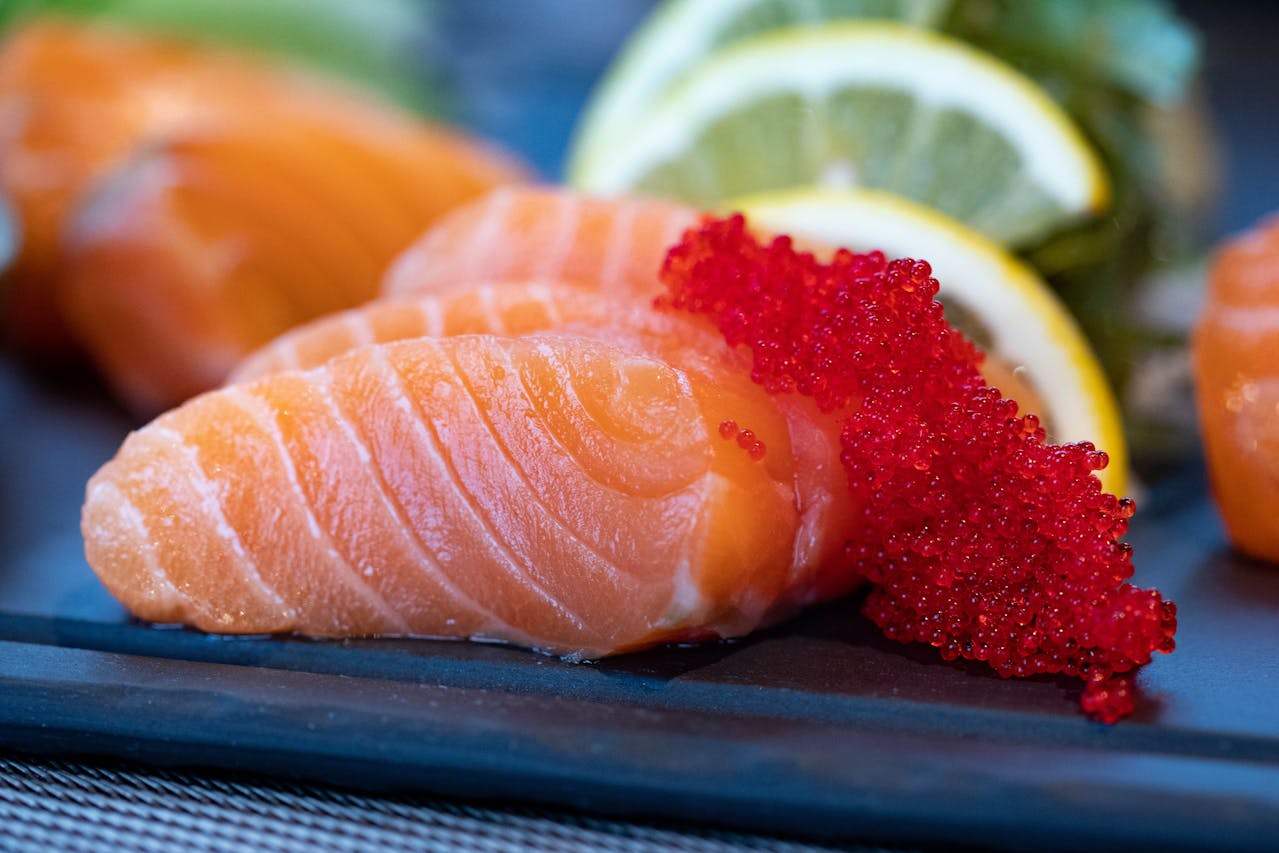
Unlike the black varieties, red caviar comes from salmonid species and is distinguished by its vibrant colour and popping texture. While less rare than sturgeon caviar, it remains central to festive tables across the world, particularly in Russia, Scandinavia, and Japan.
- Chum Salmon Roe (Keta): Known as “royal red caviar”, these eggs are large (up to 9 mm) with an orange-red hue and a creamy, delicate flavour. Considered one of the finest salmon roes.
- Pink Salmon Roe: The most common and affordable, with medium-sized orange eggs and a lighter, briny taste.
- Sockeye Salmon Roe: Deep red eggs with a bold, almost spicy flavour, prized for their intensity.
- Chinook Salmon Roe: Rare and large, with a rich and oily profile.
Prices for salmon roe in the UK generally range from £7.50 to £15 per 100 grams — a fraction of the cost of black caviar.
Other Types of Roe Often Called “Caviar”
Beyond sturgeon and salmon, other fish species produce roe that is often marketed as caviar. While not technically authentic, these varieties are enjoyed for their unique qualities and more accessible price points.
- Trout Roe: Smaller than salmon roe, with a distinct orange or yellow hue and a slightly bitter finish. Affordable and widely available, usually around £9–£18 per 100 grams.
- Whitefish Roe: Often called golden caviar, these tiny, bright-yellow eggs have a crunchy texture and mild taste. Commonly used in appetisers and garnishes.
- Lumpfish Roe: Affordable and often dyed red or black, lumpfish roe is popular as a garnish but lacks the complexity of sturgeon or salmon.
- Paddlefish Roe: Produced in the United States, it is sometimes called “American caviar” and offers a flavour reminiscent of Sevruga at a lower price.
Comparative Overview
The following table summarises the main types of caviar and roe, highlighting their origin, flavour, and average price range in the UK:
| Type of Caviar / Roe |
Source Fish |
Egg Size |
Flavour Profile |
Price Range (per 100g) |
| Beluga |
Beluga sturgeon |
3–3.5 mm |
Buttery, delicate, nutty |
£200–£390 |
| Ossetra |
Russian sturgeon |
1.5–2.5 mm |
Nutty, fruity, complex |
£75–£120 |
| Sevruga |
Sevruga sturgeon |
1–1.5 mm |
Strong, briny, salty |
£60–£100 |
| Siberian Sturgeon |
Siberian sturgeon |
1–1.5 mm |
Mild, earthy |
£80–£100 |
| Chum Salmon (Keta) |
Salmon |
6–9 mm |
Creamy, delicate |
£12–£15 |
| Pink Salmon |
Salmon |
4–5 mm |
Light, briny |
£7.50–£10 |
| Trout |
Trout |
2–4 mm |
Bitter, tangy |
£9–£18 |
| Whitefish |
Whitefish |
<2 mm |
Mild, crunchy |
£5–£8 |
| Lumpfish |
Lumpfish |
<2 mm |
Salty, dyed |
£3–£6 |
How to Choose Between Types of Caviar
With so many varieties, how does one choose the right caviar or roe? Much depends on occasion, budget, and personal taste.
- For special celebrations, Beluga or Ossetra provide the most luxurious experience.
- For culinary versatility, salmon roe offers bold colour and a pleasant pop, perfect for appetisers or sushi.
- For affordable indulgence, trout and whitefish roes allow experimentation without the high cost.
In practice, many gourmands enjoy alternating between premium sturgeon caviar and more affordable alternatives, depending on the setting.
Cultural Significance
Caviar has a deep cultural resonance. In Imperial Russia, it symbolised wealth and was served at royal banquets. In Europe, it became a fixture of aristocratic dining, paired with champagne or vodka. Today, caviar remains a symbol of refinement, though modern aquaculture has made it more accessible than in centuries past.
Even so, the prestige of black sturgeon caviar remains unmatched. Its association with exclusivity continues to make it the centrepiece of fine dining experiences worldwide.
Conclusion
The world of caviar is far more diverse than many realise. From the rare Beluga and Ossetra to the vibrant red roe of salmon, each type brings its own character to the table. While black sturgeon caviar remains the pinnacle of luxury, salmon and trout roes provide a more approachable way to enjoy the pleasures of fish eggs.